

In 2022, it was identified that mobile conversion on wilko.com was around 1% below industry parity. Doesn’t sound a lot, but that 1% was leaving anywhere between £15m-£20m per year on the table.
30 second summary from ChatGPT
This case study demonstrates an experimentation-driven approach inspired by Lean UX principles. This methodology emphasised identifying problems, formulating hypotheses, prioritising ideas based on value, and conducting real-world tests to validate outcomes.
These efforts collectively raised mobile conversion rates from 1.4% to over 4.4%, demonstrating Steve’s proficiency in leveraging experimentation and Lean UX methodologies to drive substantial business outcomes.
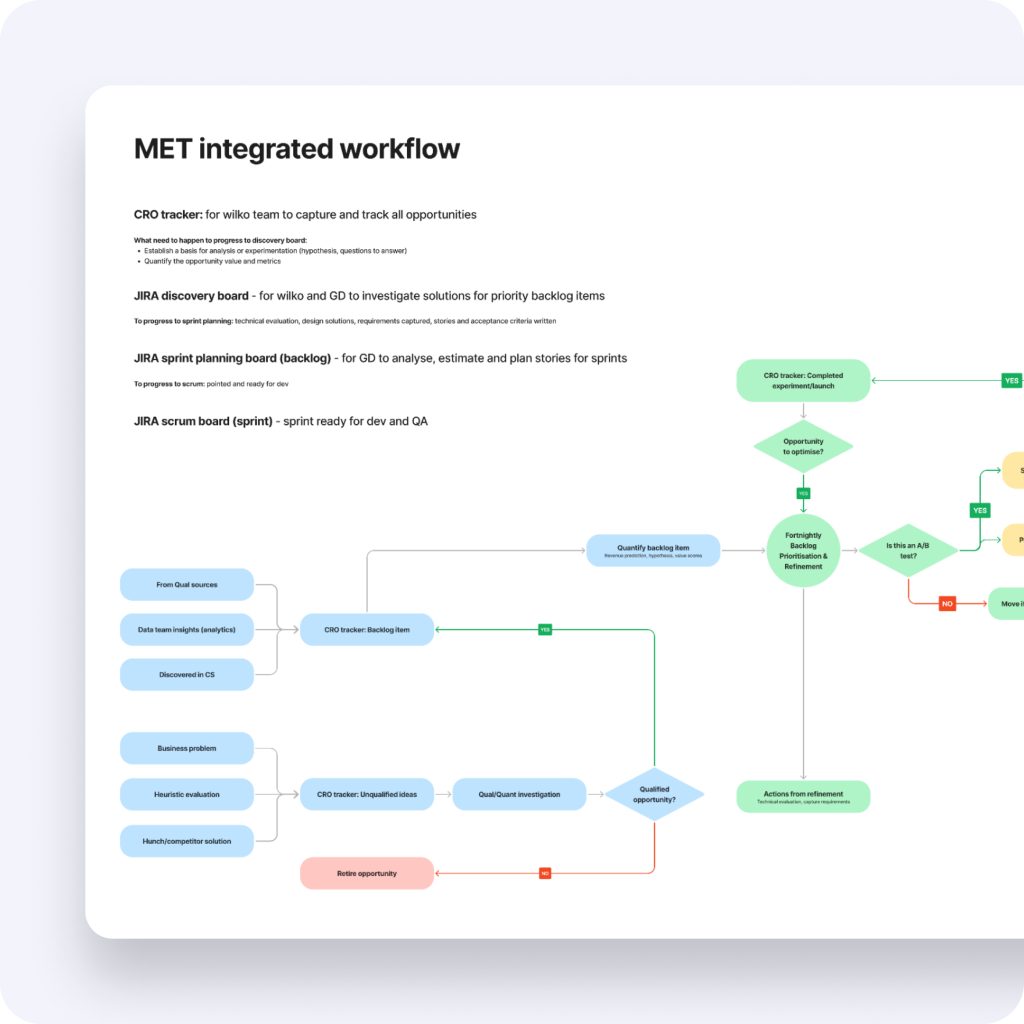
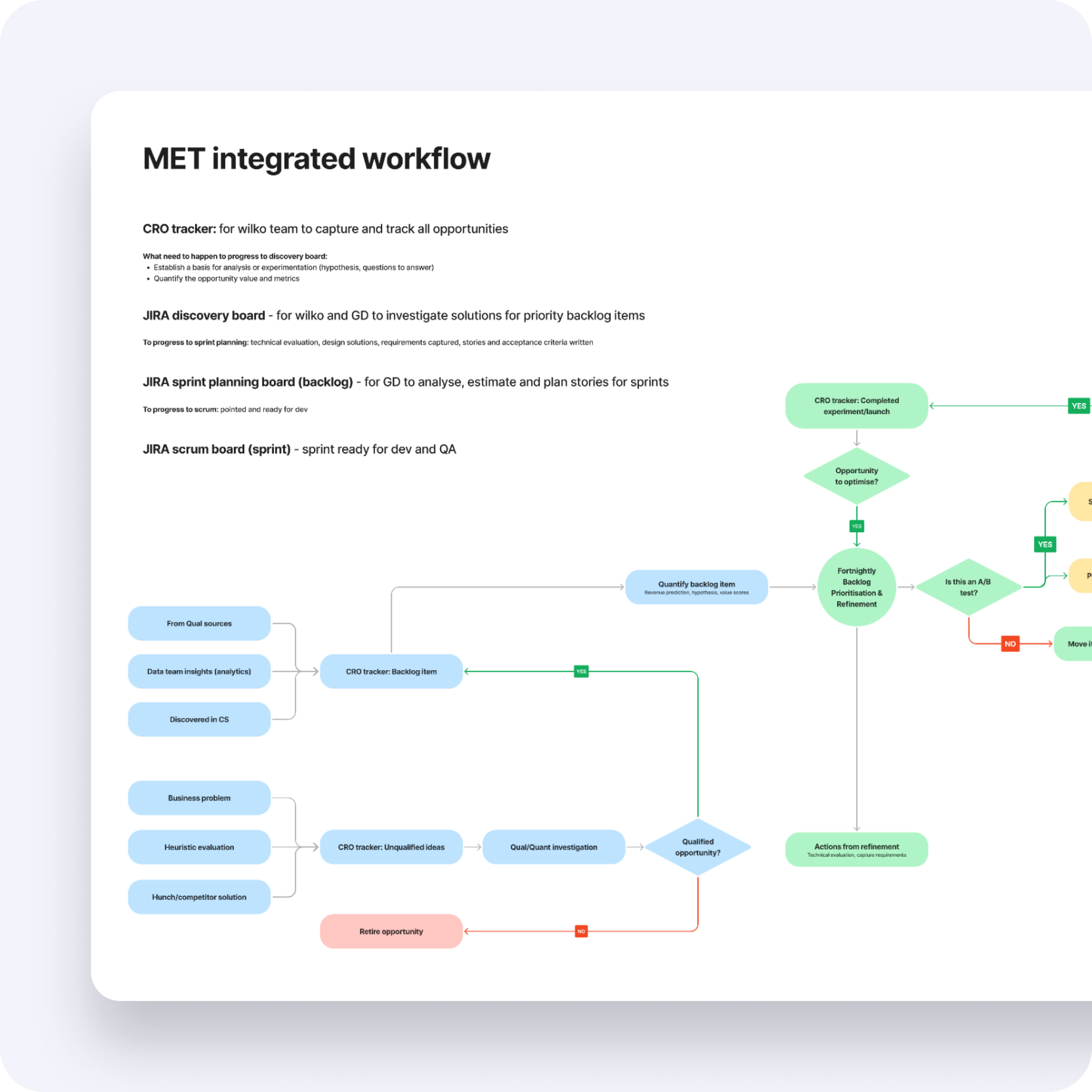
The ‘MET’ team
A new squad was formed, which I help to setup, to tackle the problem of poor performance on mobile. Part of establishing the squad was to define a new way of working that focused on outcomes and quantifiable results over outputs and features.
- I worked with the new dev team, CRO manager and product owner on an experimentation-led framework that borrowed concepts from Lean UX
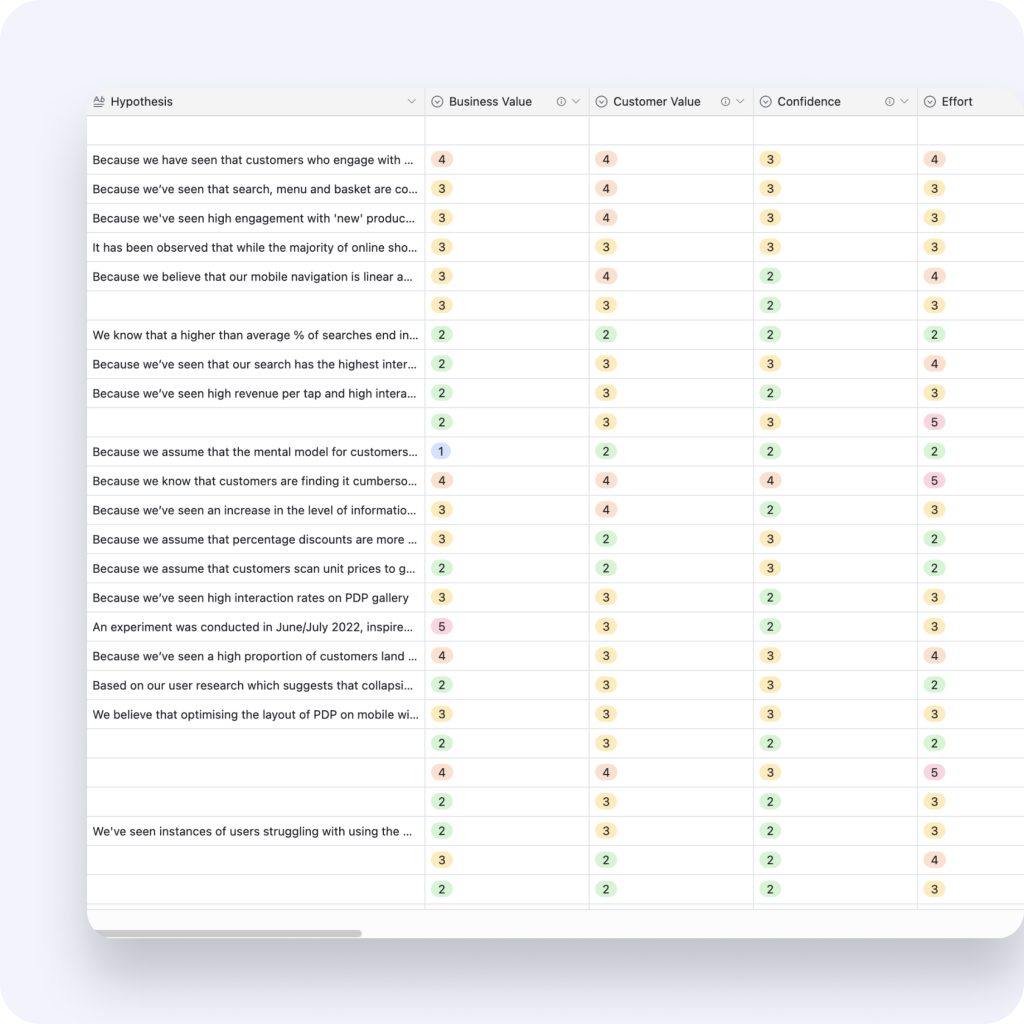
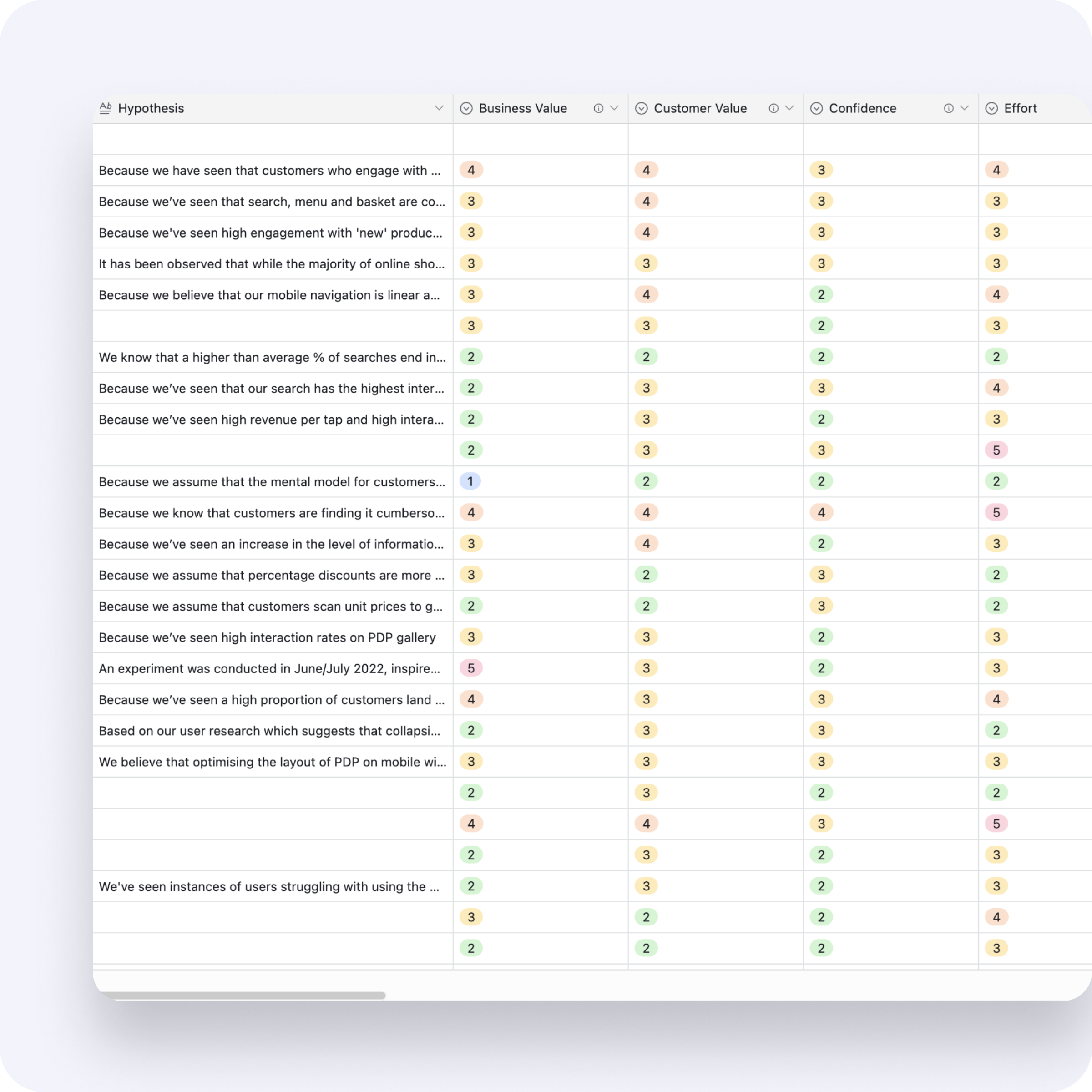
- It enabled us to identify the right problems to solve, form clear hypotheses, prioritise each idea with weighted value scores and then run tests in the wild to validate their success
- This approach worked well for our mission, because it was primarily aligning the wilko.com shopping experience with the e-commerce mental model, so the problem space was relatively clear
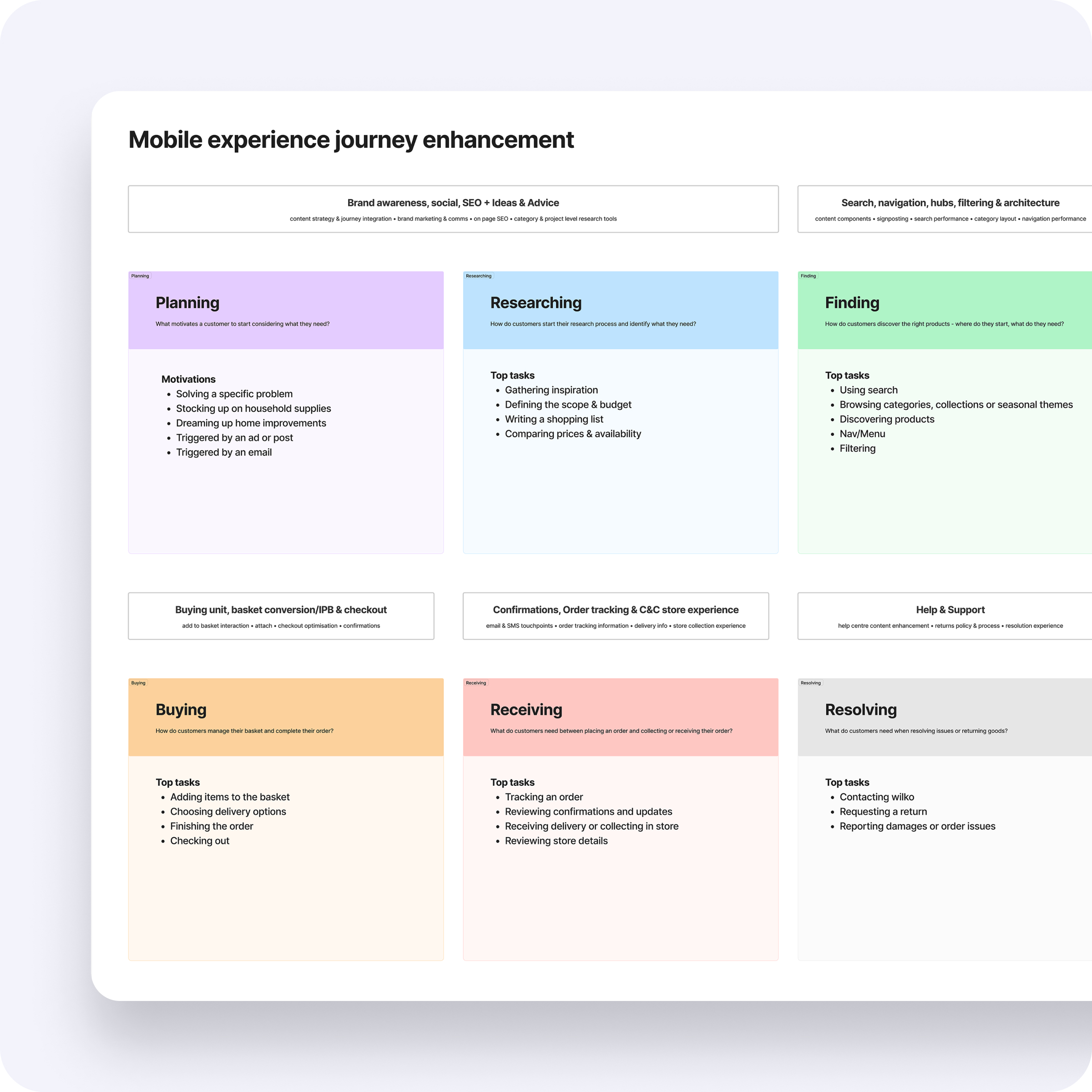
Core journey enhancement
I put together a journey touchpoint map to focus our efforts on the top tasks and pain points within each section of the journey. Given that we had licence to go anywhere, it also helped us to co-ordinate with other product teams to avoid clashing.
Our squad mainly sat in ‘Finding, Shortlisting and Buying’ stages of the journey as they were the most influential over conversion and helped us reach statistical significance on tests much faster.
The top tasks were high-level assumptions, based on previous research from the Insight Team and backed by session views and journey analysis. I added known pain points as we began to uncover them during our research.
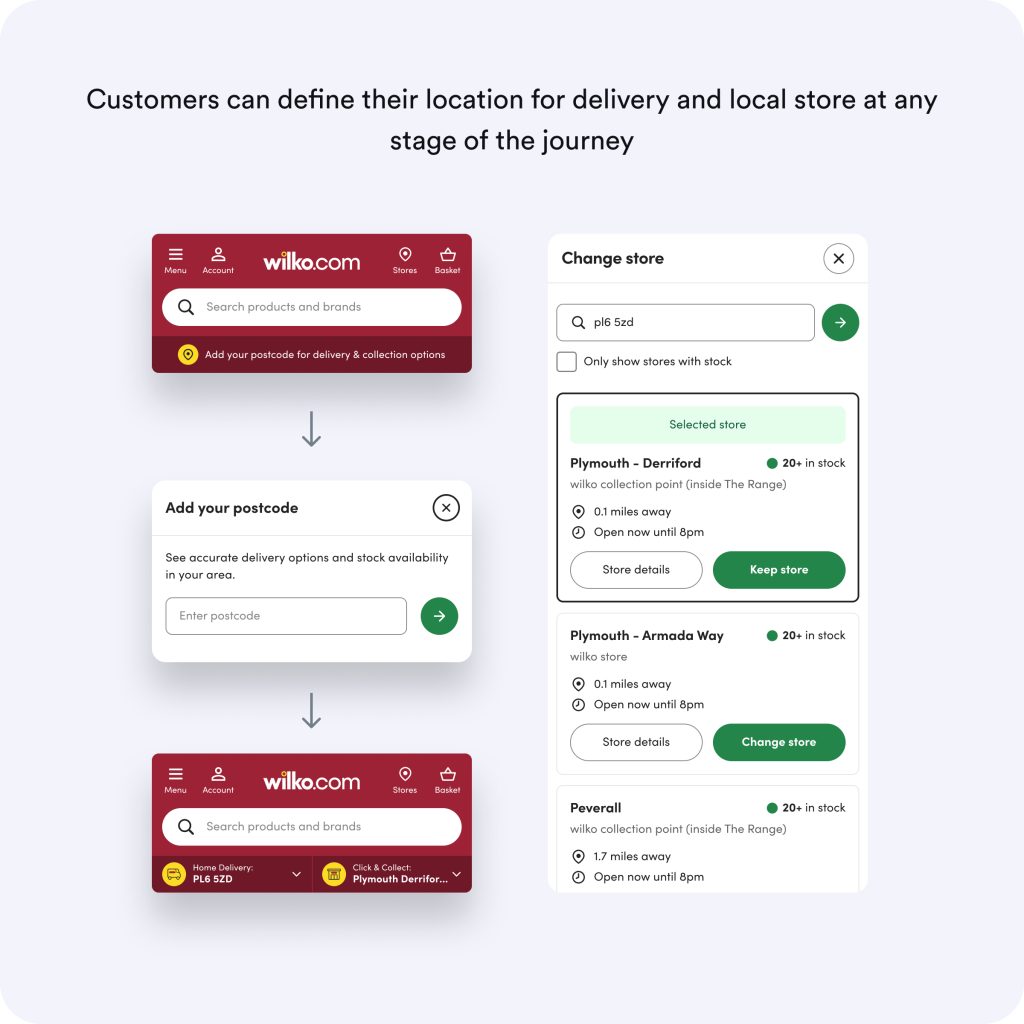
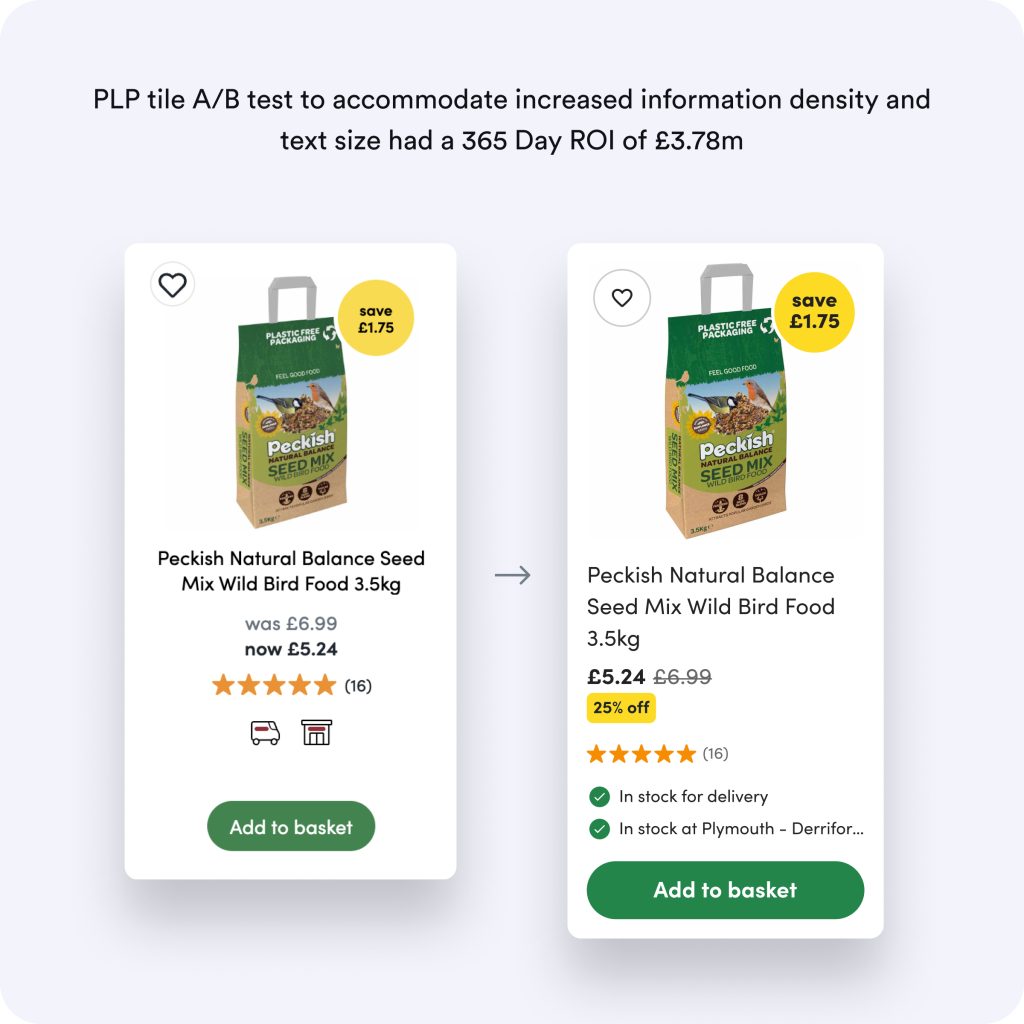
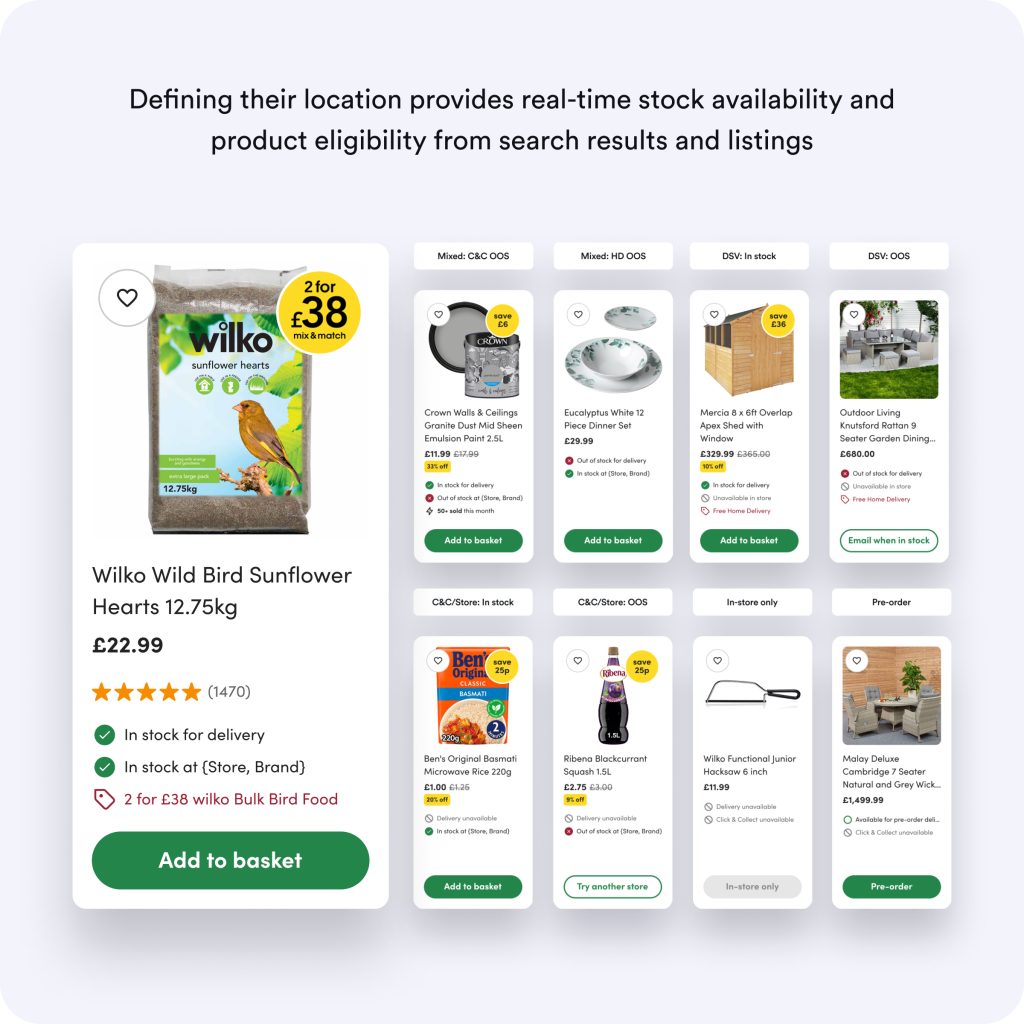
Localised shopping
+£5.75m/yr predicted · In progress
Opportunity
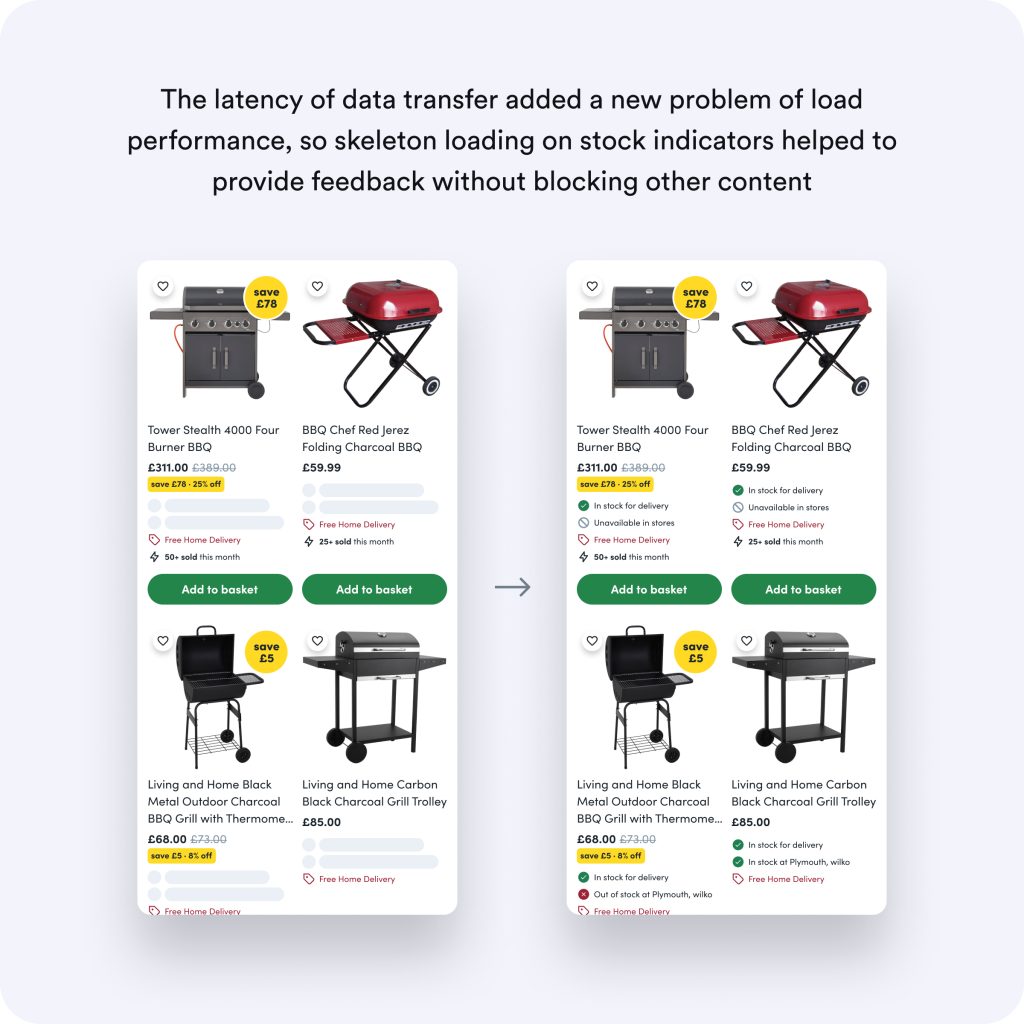
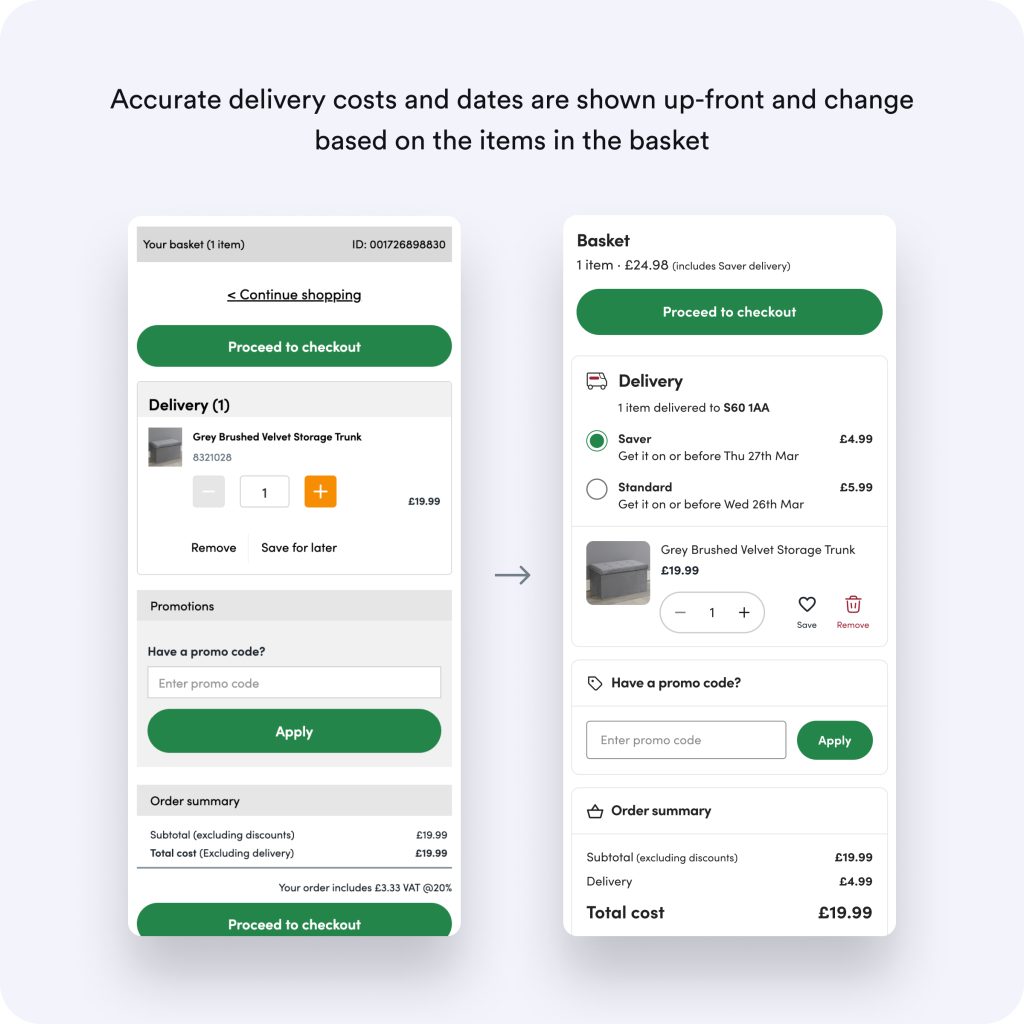
2 of the top 5 customer pain points from survey feedback was related to lack of visibility of delivery costs, options and product availability. These issues stemmed from introducing Click & Collect, pre-orders and accelerating dropship growth, which presented a major tech challenge.
Hypothesis to test
If we enable customers to add their postcode to see real-time product availability and delivery options from any point in their transactional journey, we will improve satisfaction and conversion.
A standalone case study is in progress for this piece.
Filtering
+£3.22m/yr predicted · In progress
Opportunity
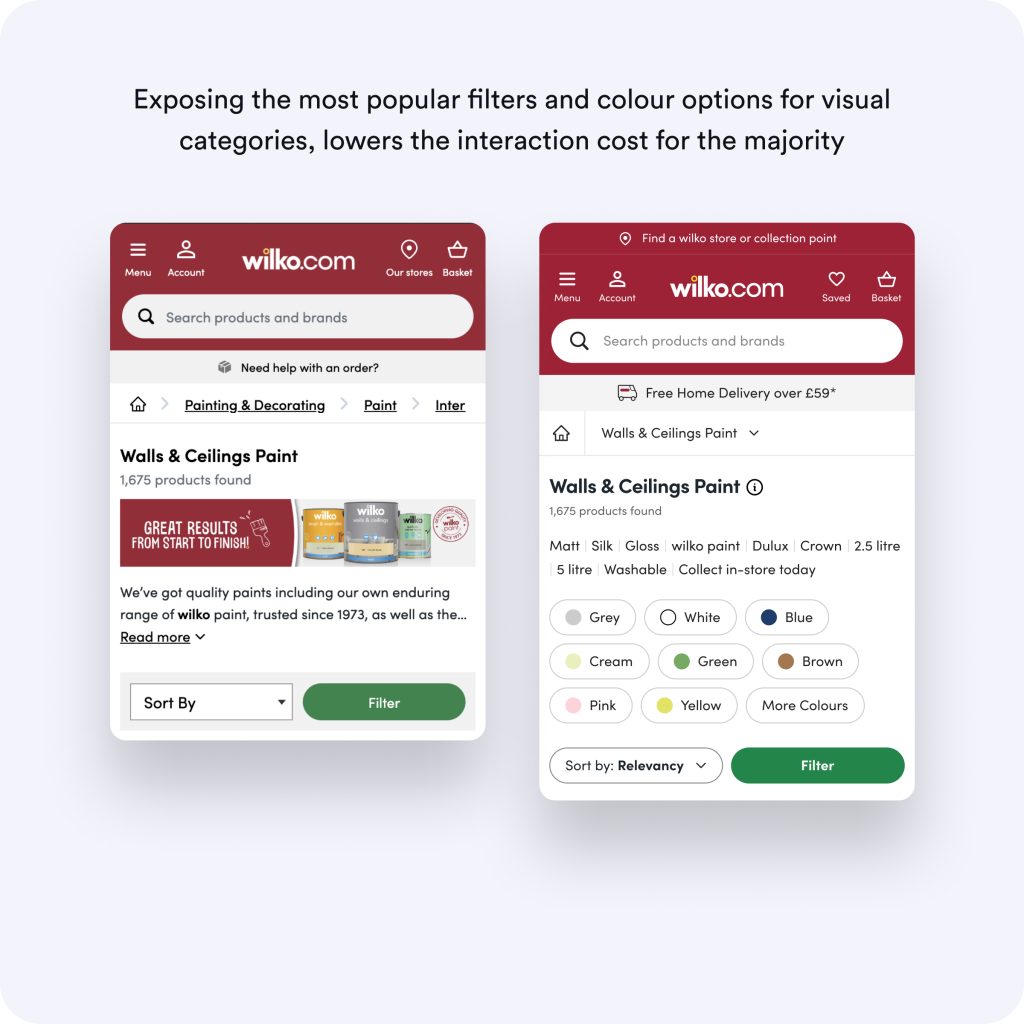
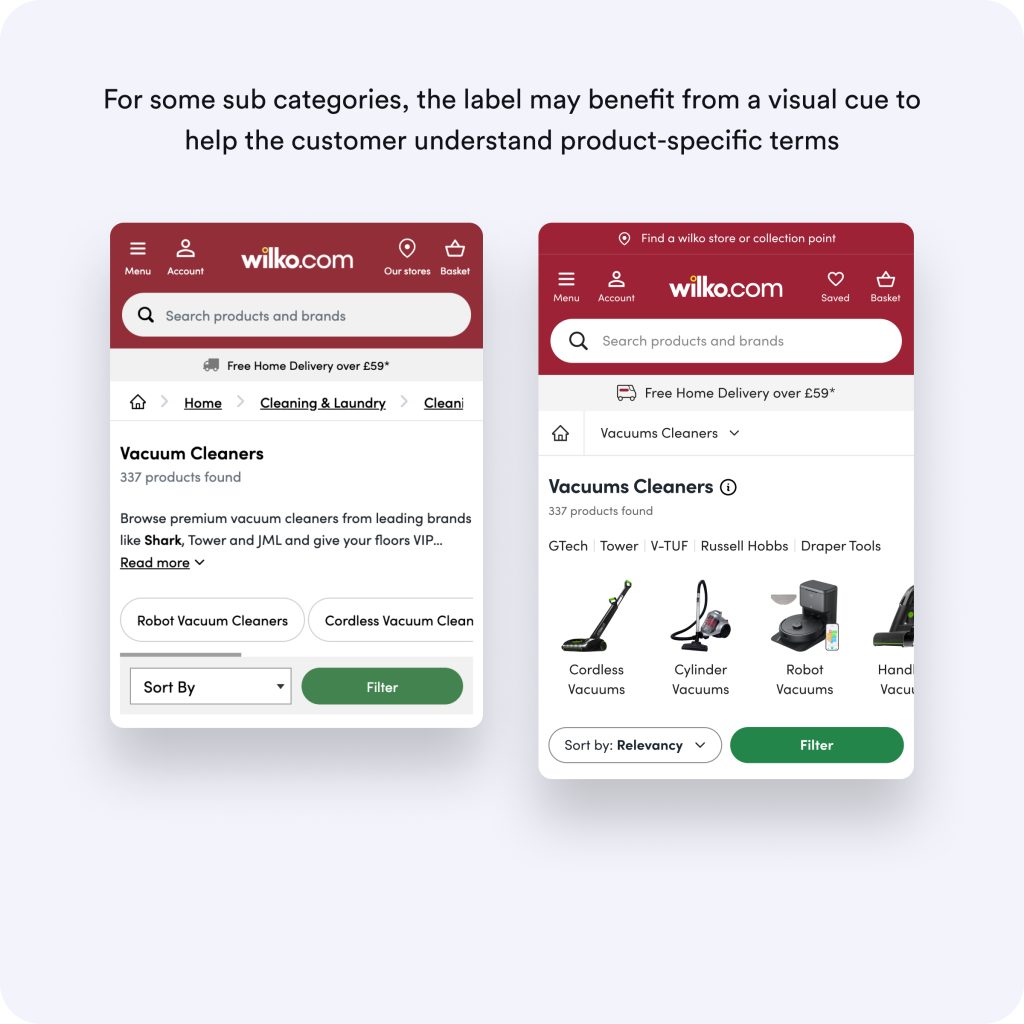
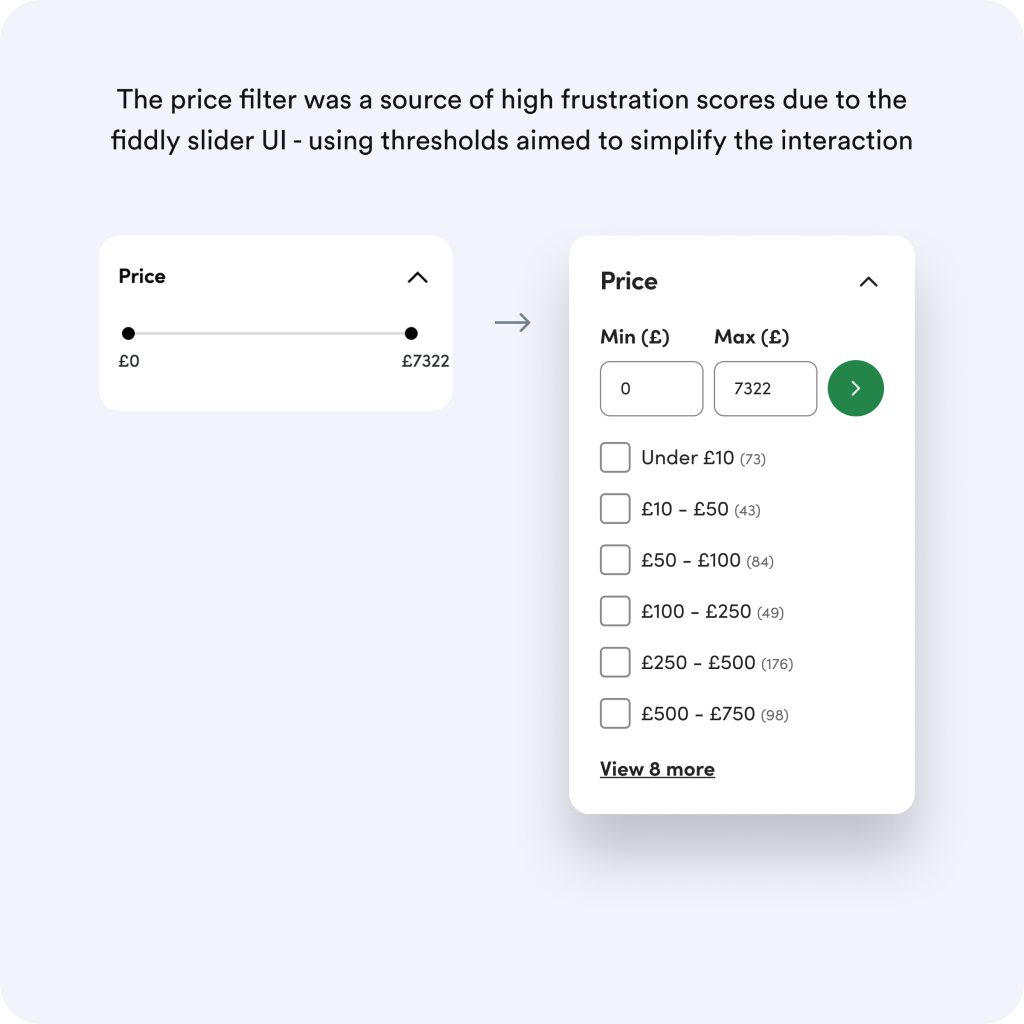
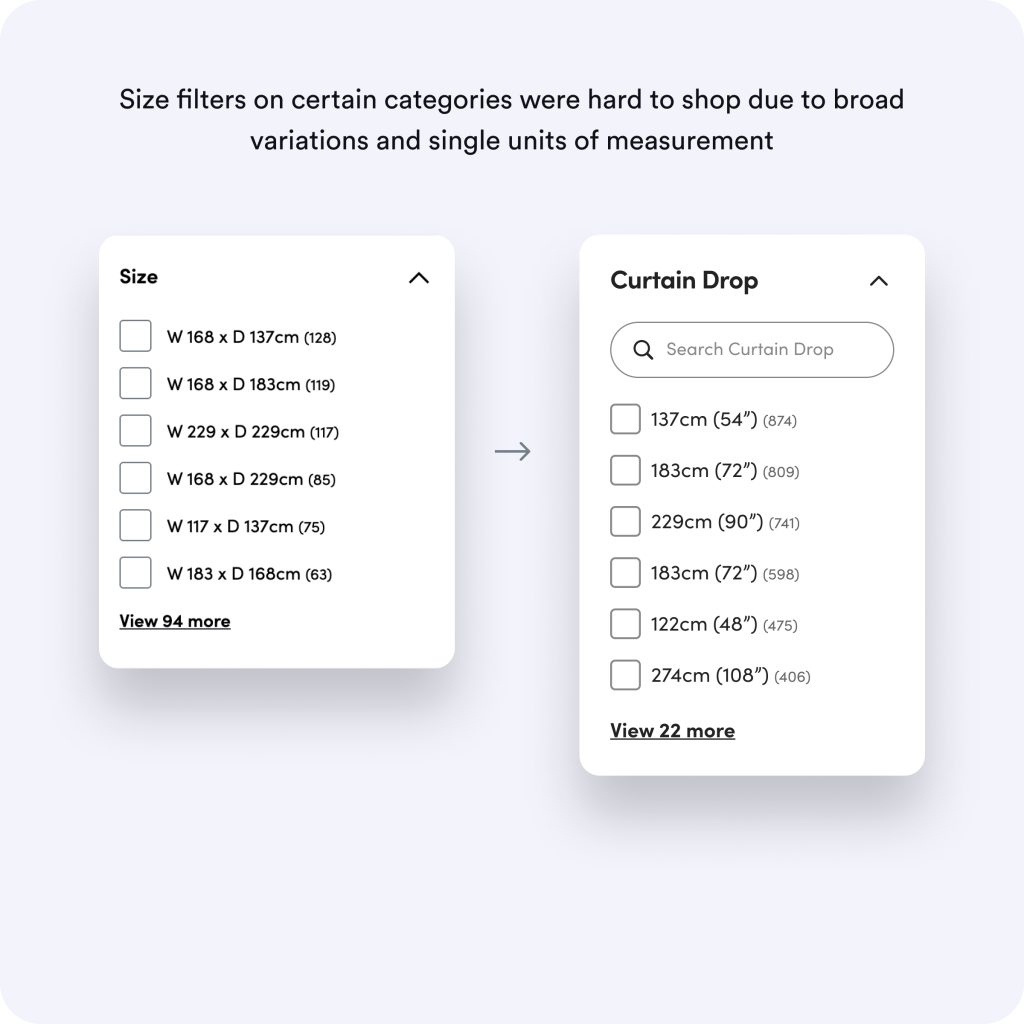
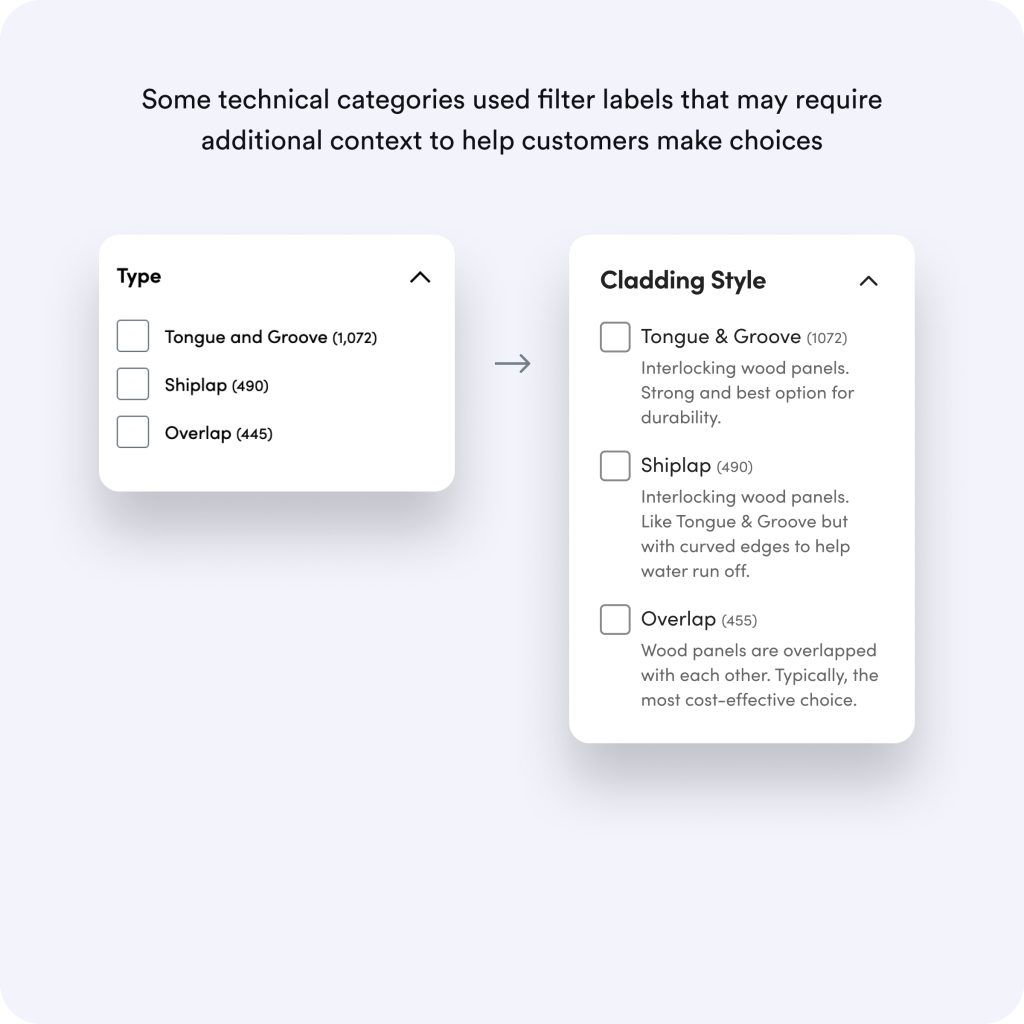
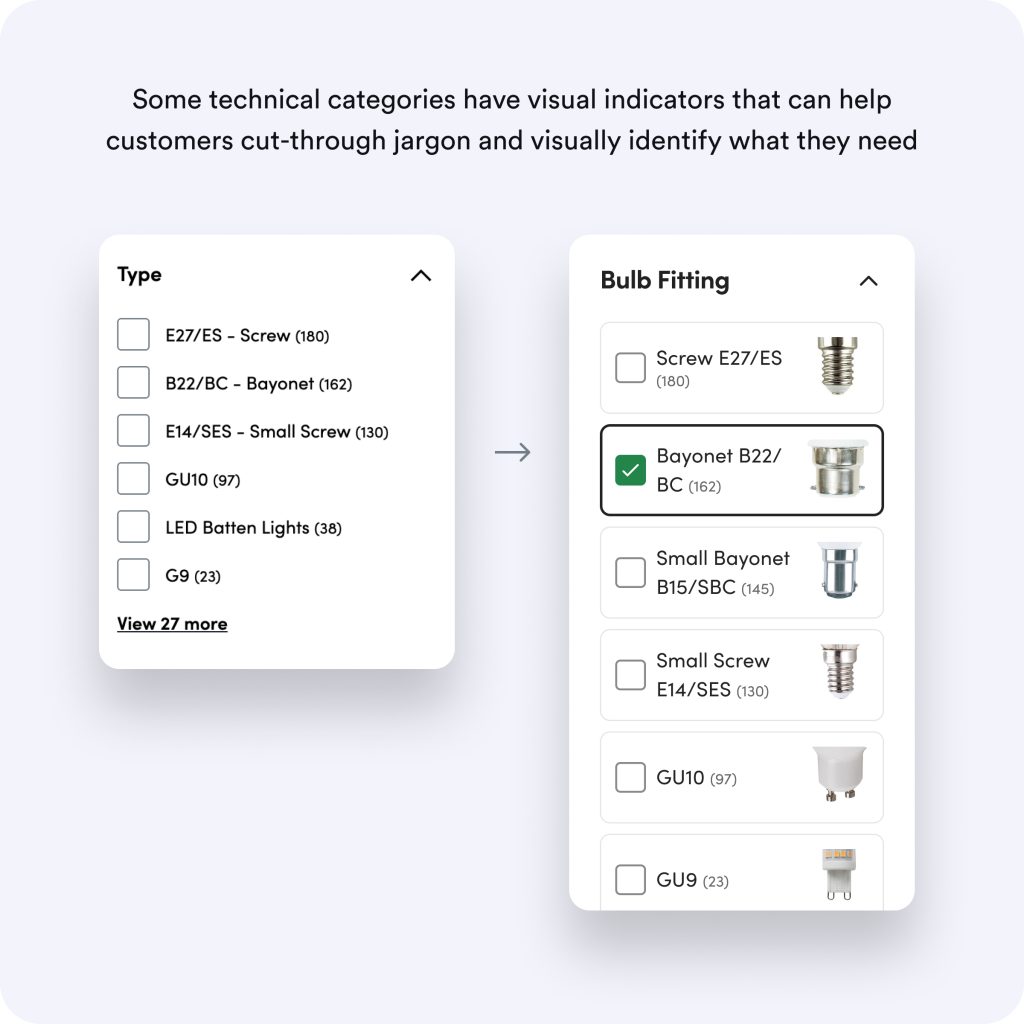
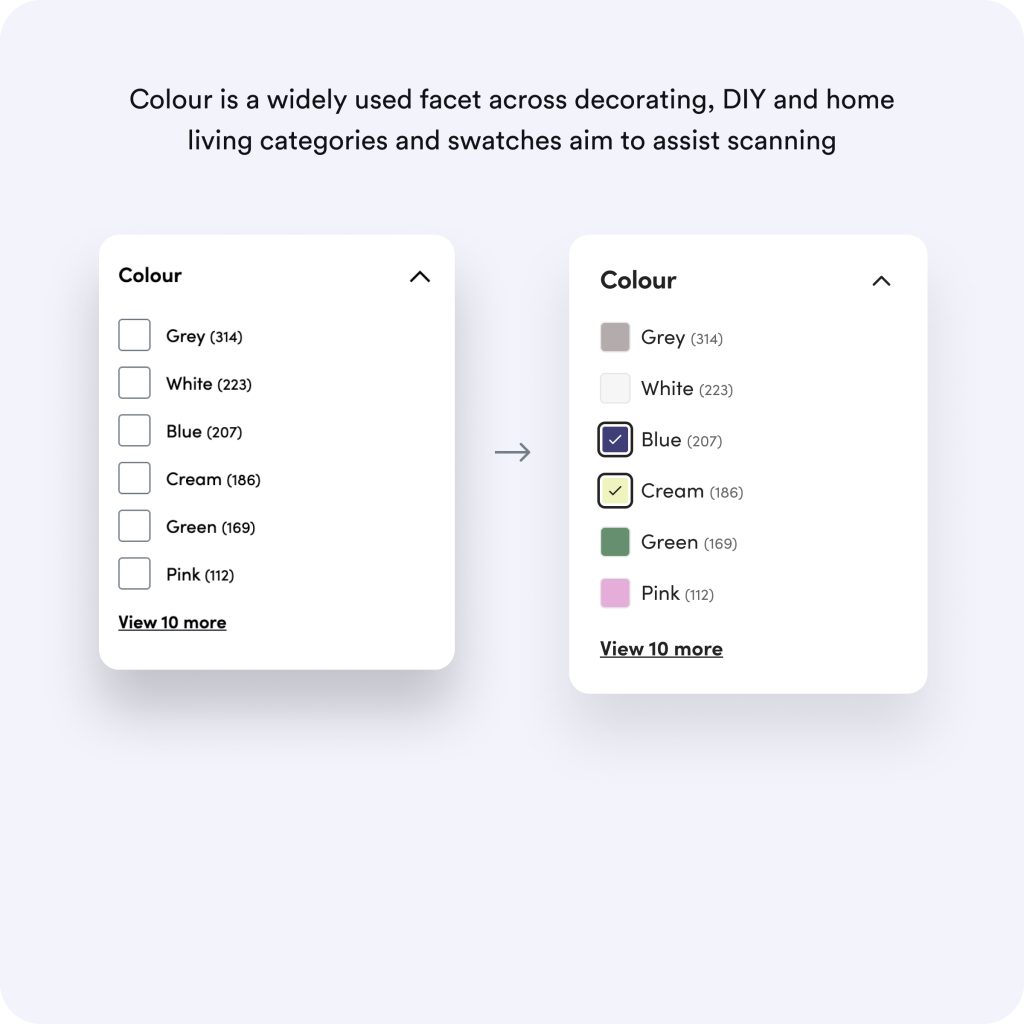
The 7% of customers that interact with filters on mobile have a higher conversion rate and average spend. If more customers used mobile filters, we’d generate higher conversion. Filters on mobile lists have low discoverability so users have difficulty in narrowing their search and finding the right products.
Hypothesis to test
If we improve filter usability and expose the most popular facets or filters on mobile, we’ll reduce the interaction cost and increase discoverability, which will help users narrow their search faster and drive higher add to basket rates and overall conversion.
Product recommendations
+£3.49m/yr
Opportunity
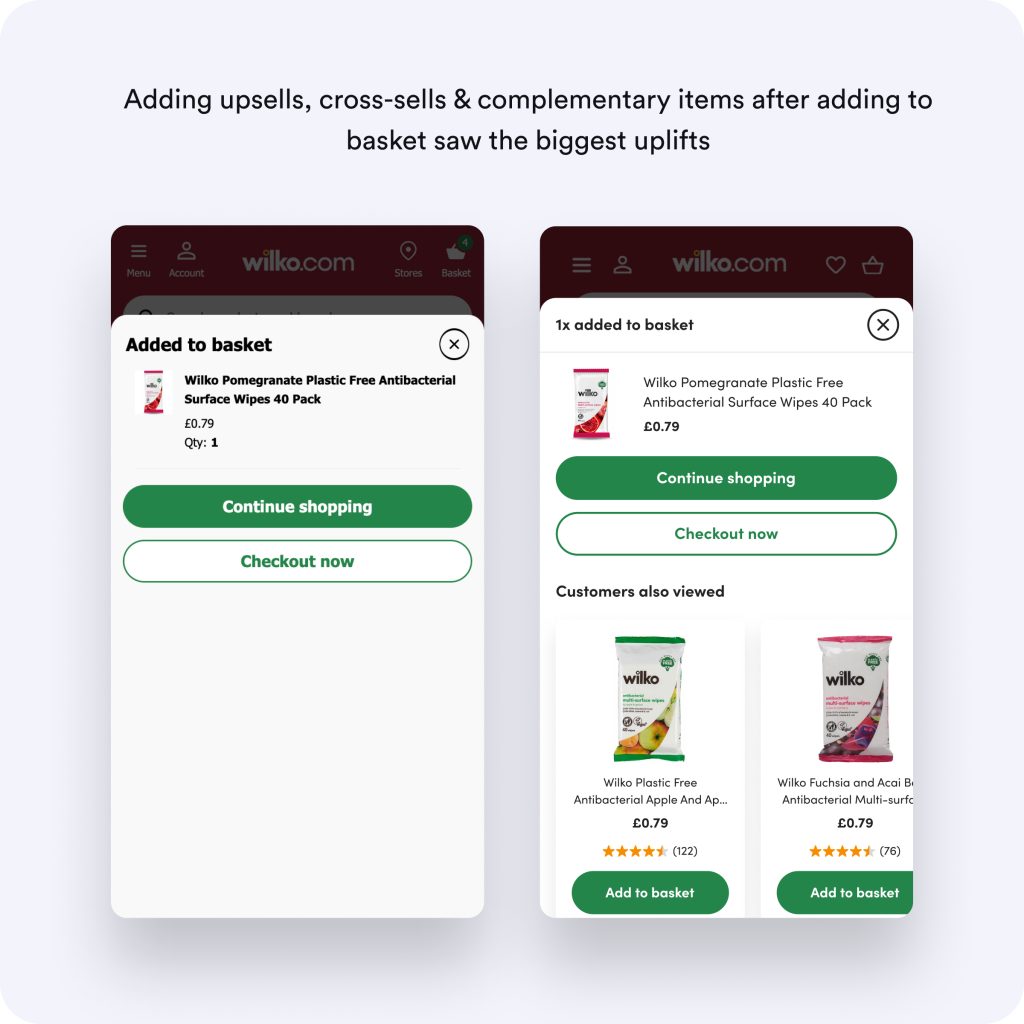
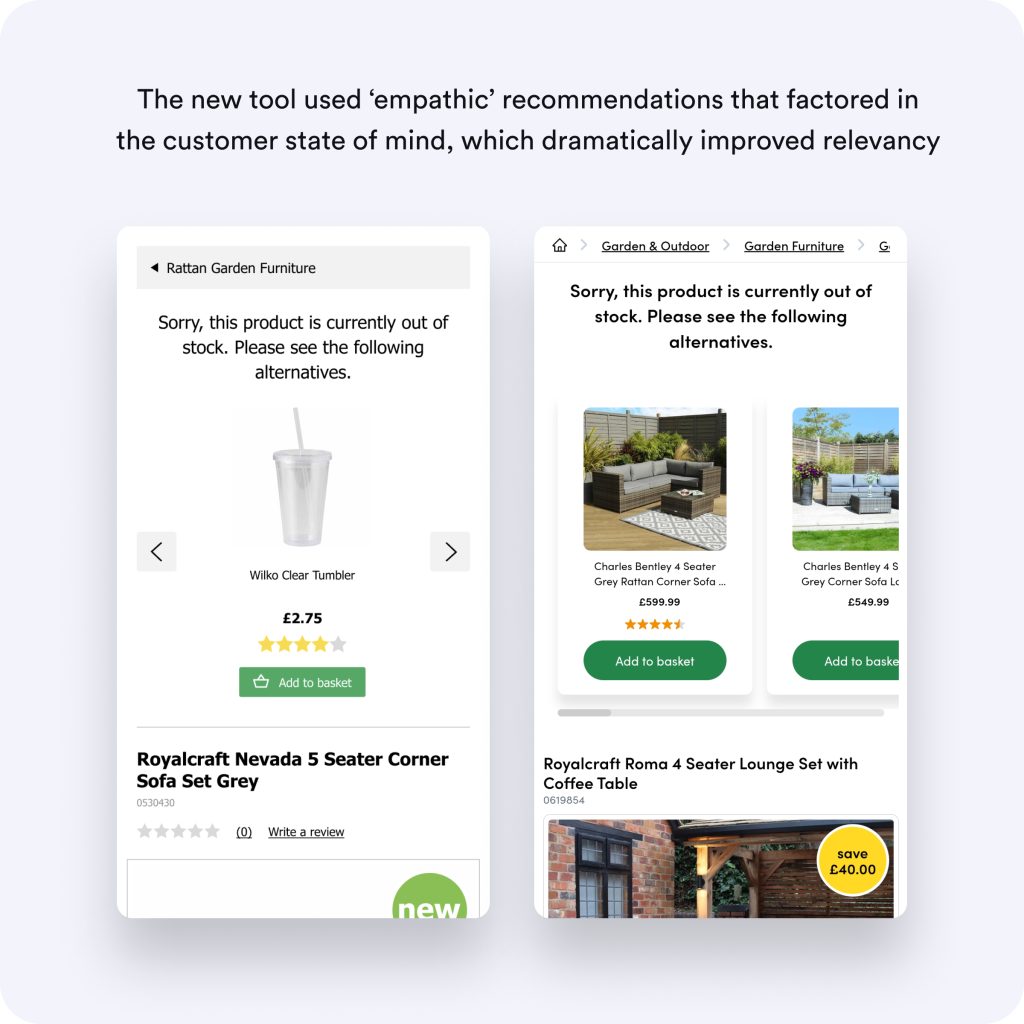
The tool powering product recommendations is so primitive, that it’s no longer sold to businesses. User feedback suggests that the wild inaccuracy mixed with the high interaction cost on mobile, is causing more harm than good.
Hypothesis to test
If we trial a new personalisation tool under a proof of concept and add recommendations in prominent positions such as after adding items to basket, we will see a significant uplift of our transactional KPIs including conversion, items per order and average order value.
Wayfinding on mobile
+£605k/yr
Opportunity
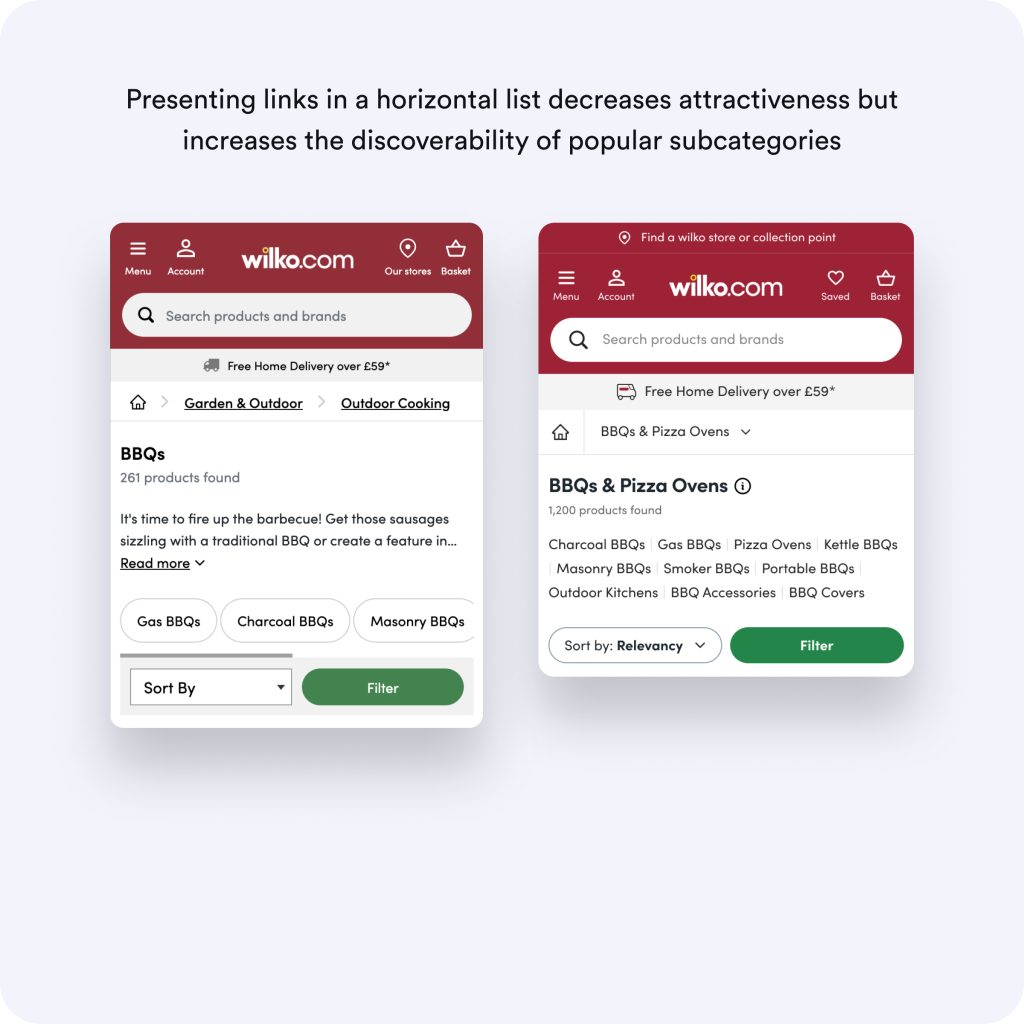
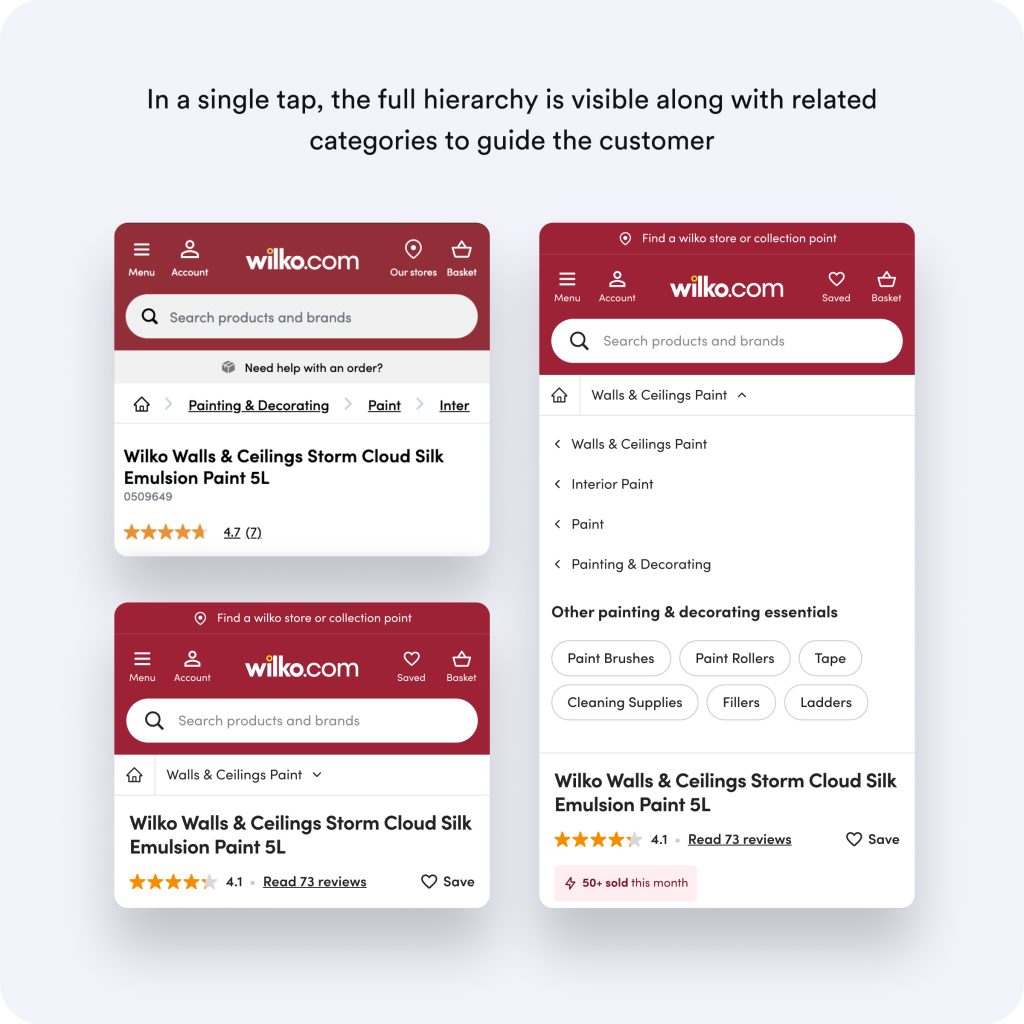
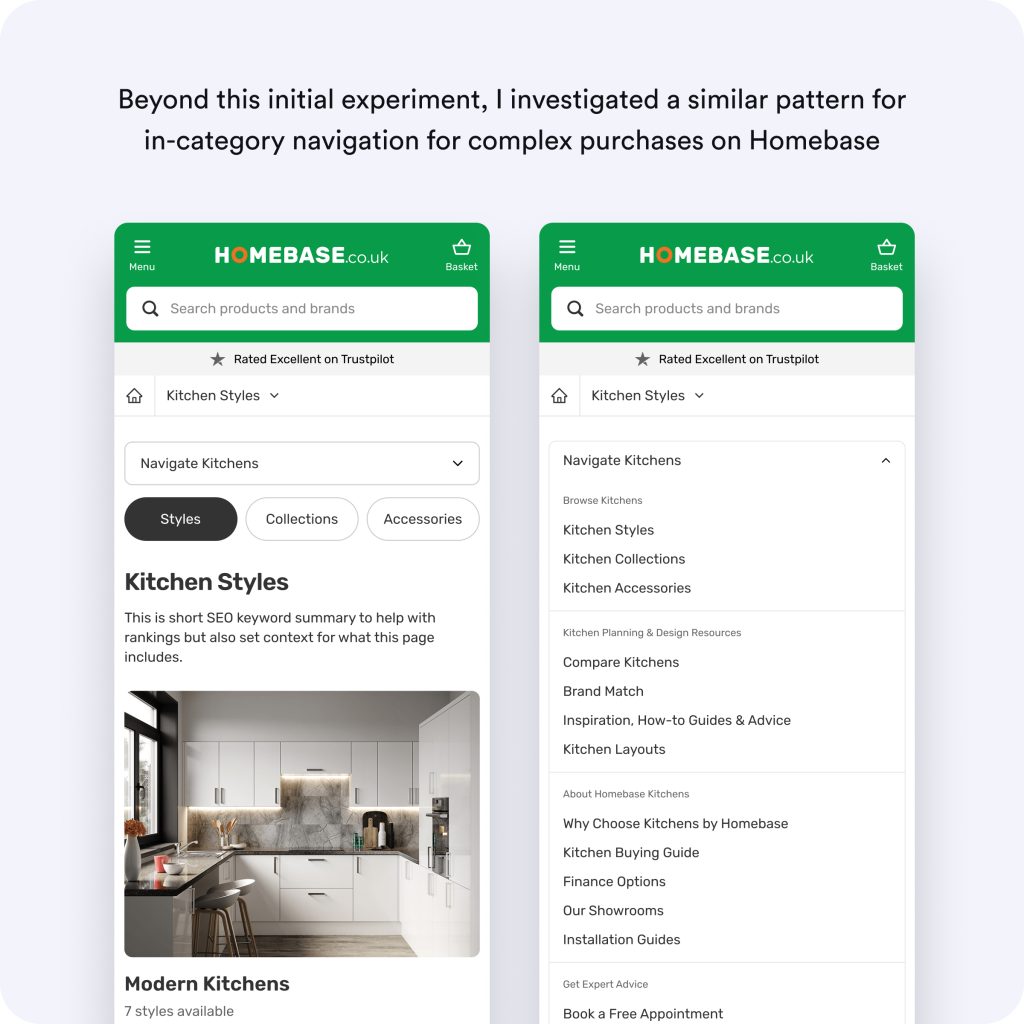
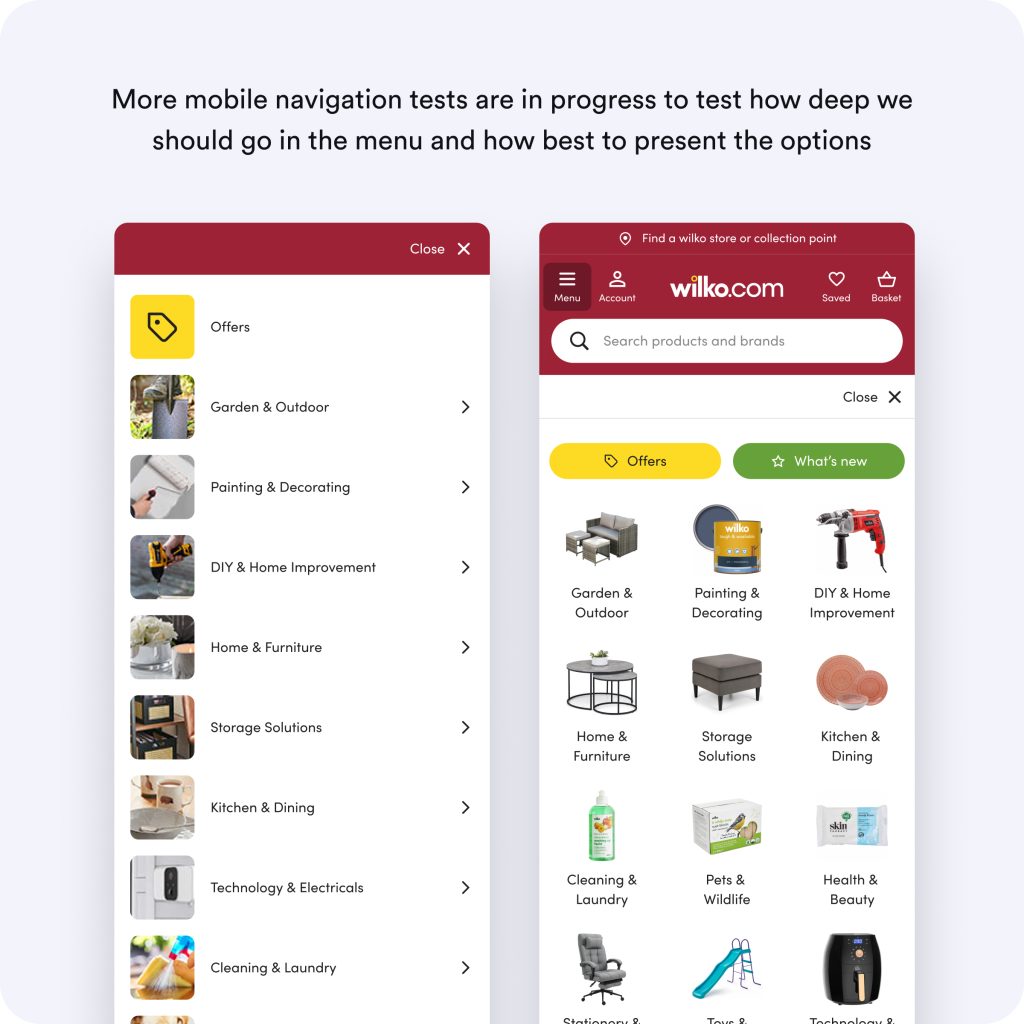
c.60% of traffic arrives on a product page or listing, which are often 3+ levels deep, so it’s important to orientate new users. Navigating within a category on mobile is difficult due to the lack of exposure of related categories.
Hypothesis to test
If we introduce a quick nav across the journey that shows the hierarchy and cross-navigation within a single interaction, we will see higher progression and engagement once the behaviour has been learned, leading to increased conversion.
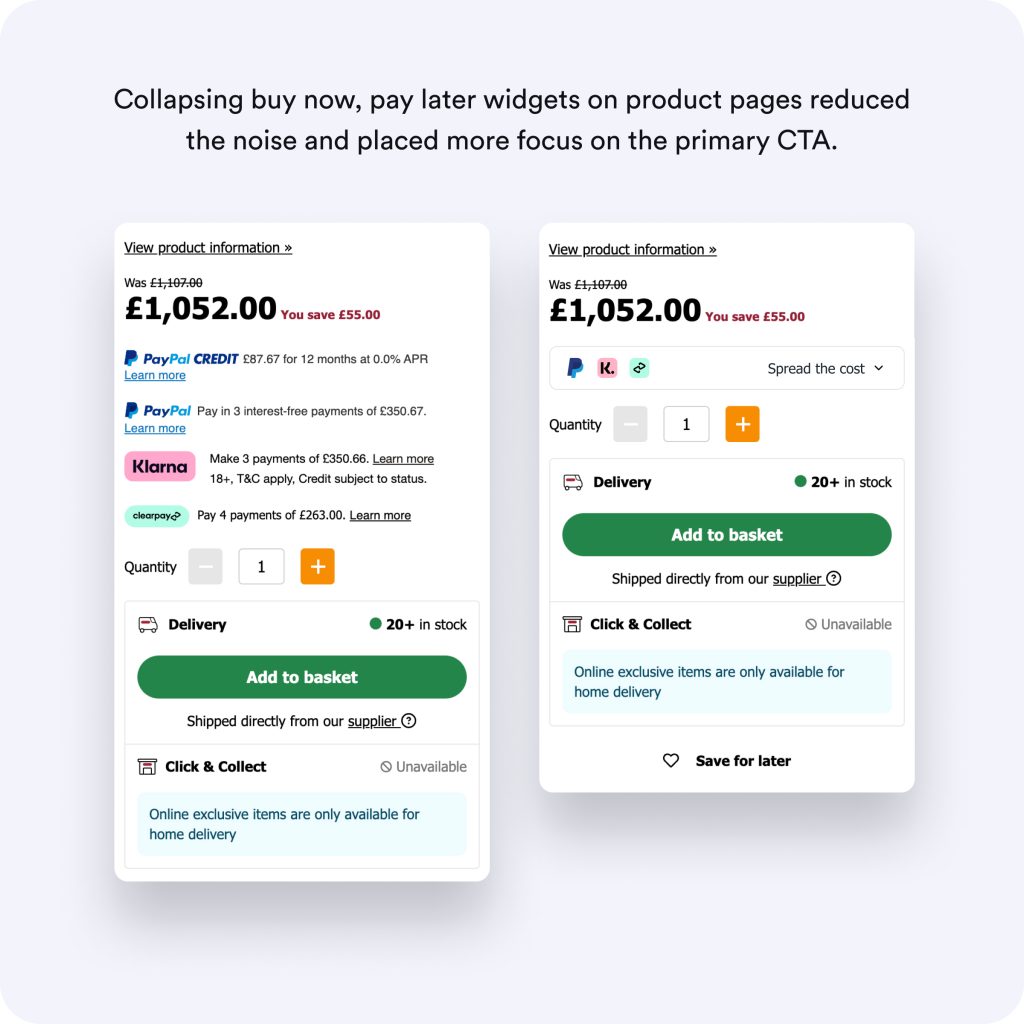
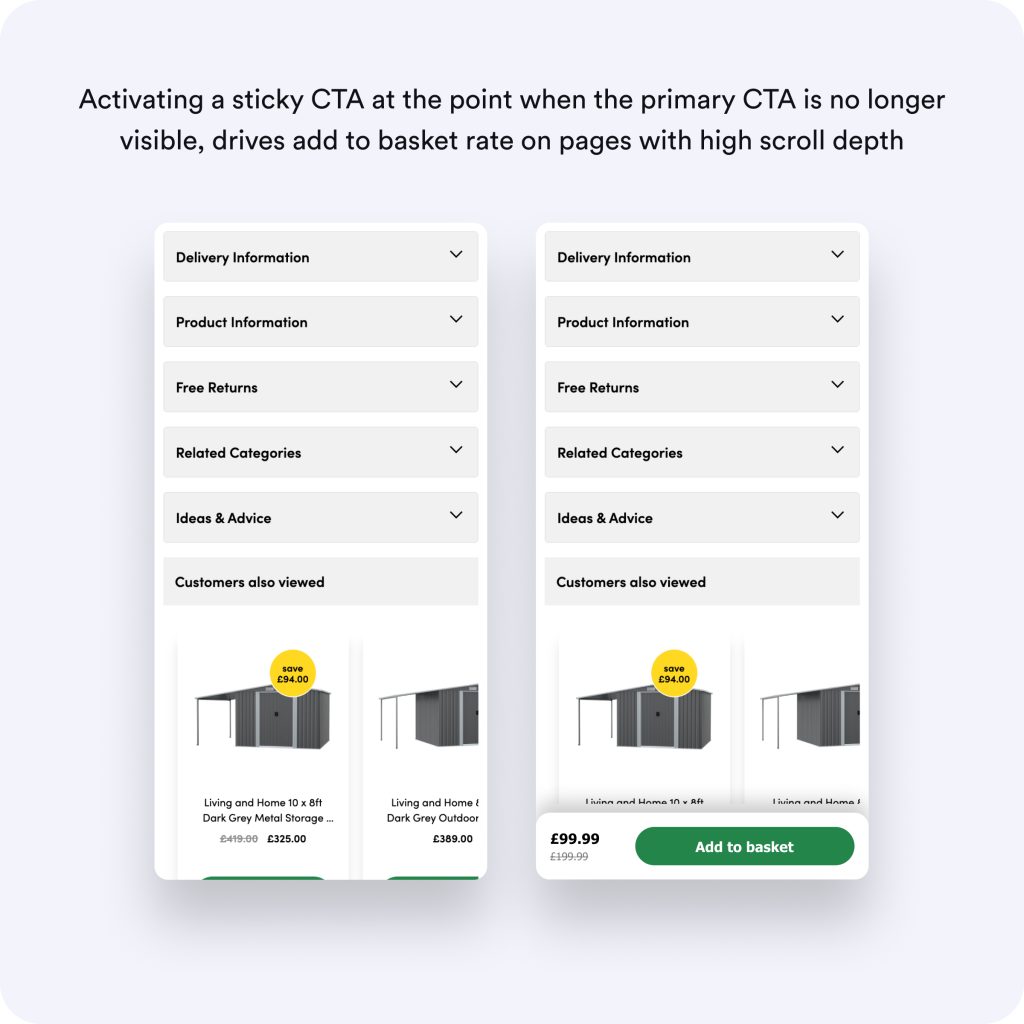
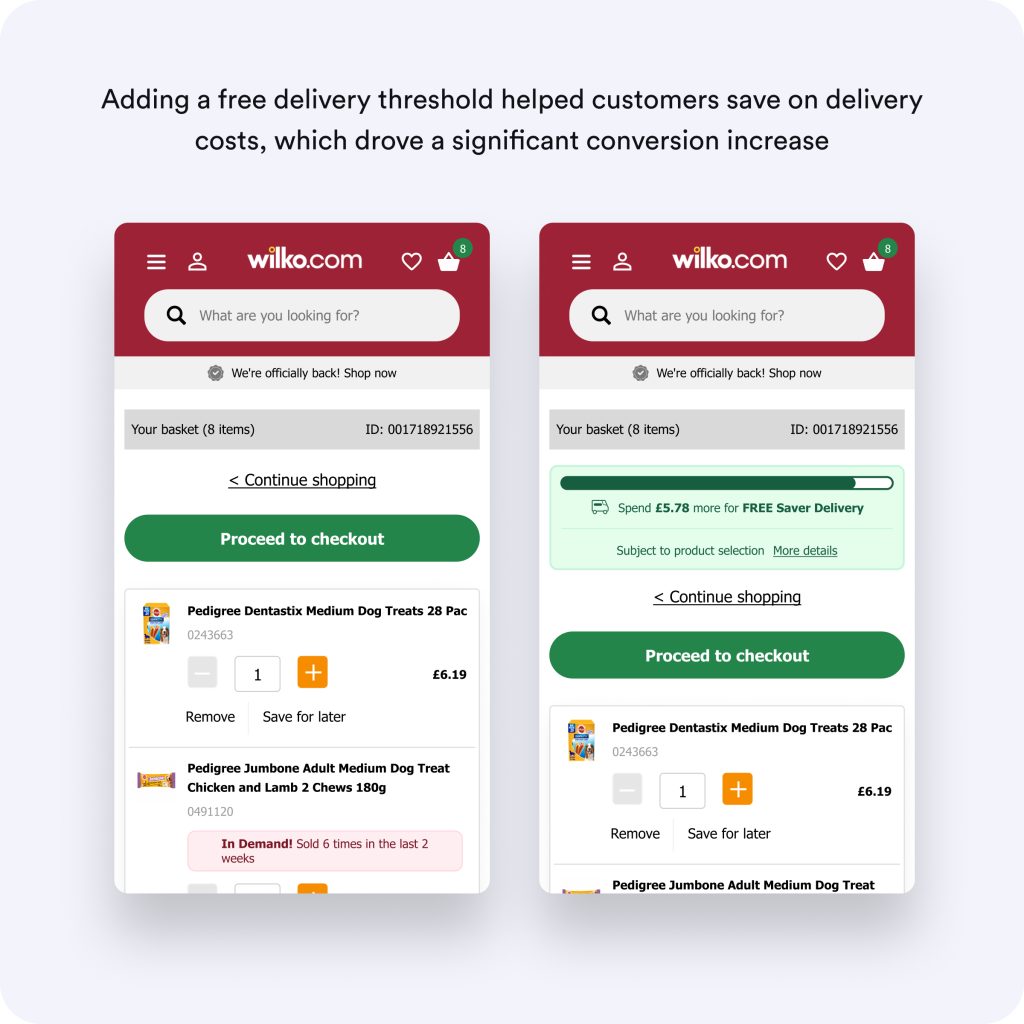
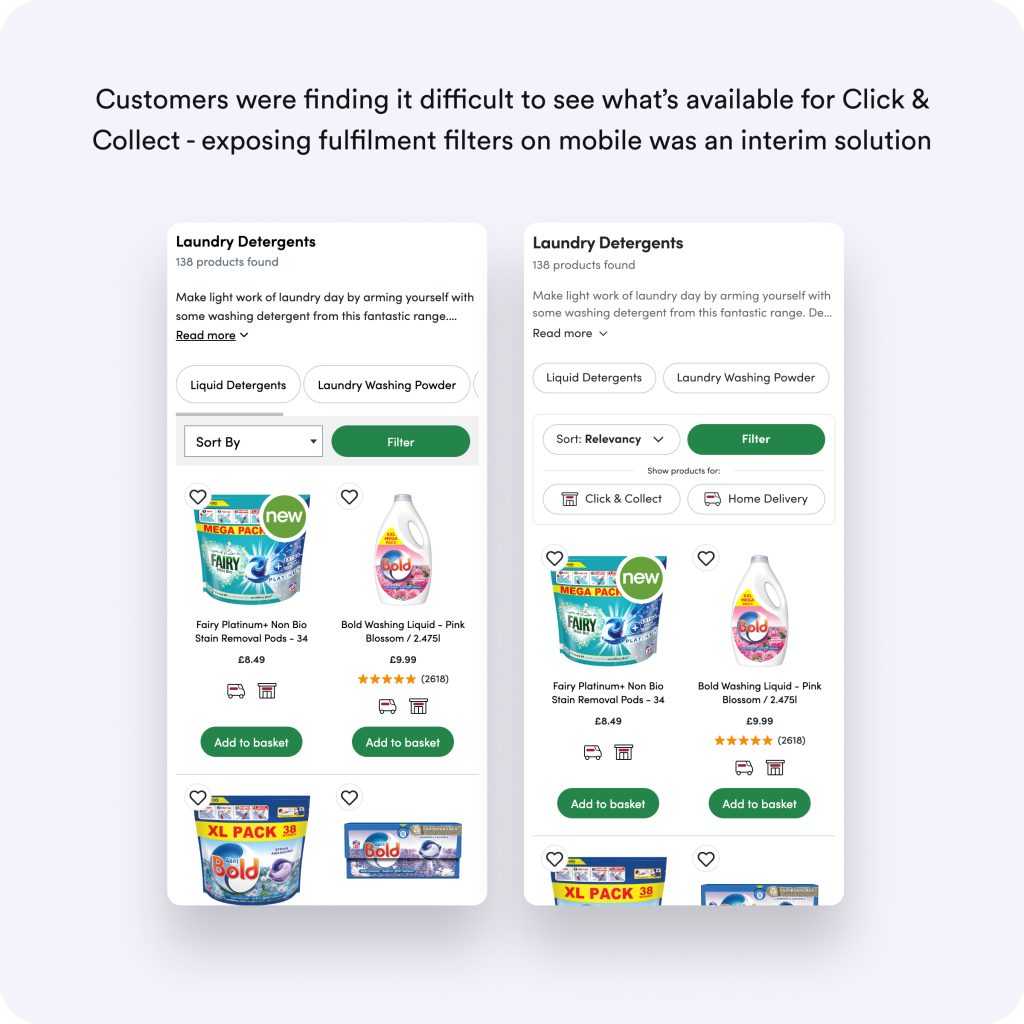
Low hanging fruit
+£5.57m/yr
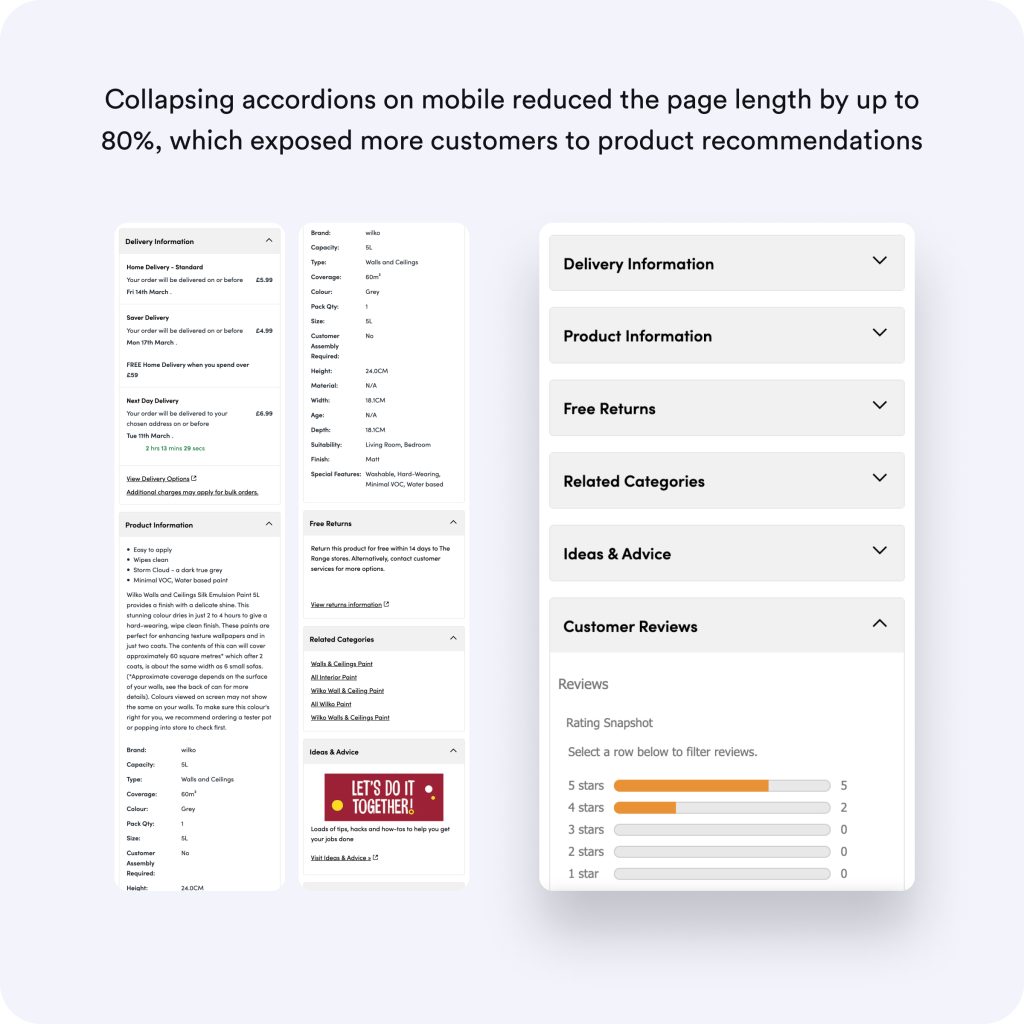
Collapsed accordions on PDP +£630k
Collapsed Buy Now, Pay Later propositions +£2.4m
Sticky add to basket on PDP +£770k
Free delivery threshold progress +£1.1m
Fulfilment filters on PLP +£670k


Checkout optimisation
+637% ROI
Checkout was a big part of our early experimentation plan to widen the end of the funnel and allow more sales to flow through. This was our first major experimentation project, which I created a standalone case study for.
View checkout case study